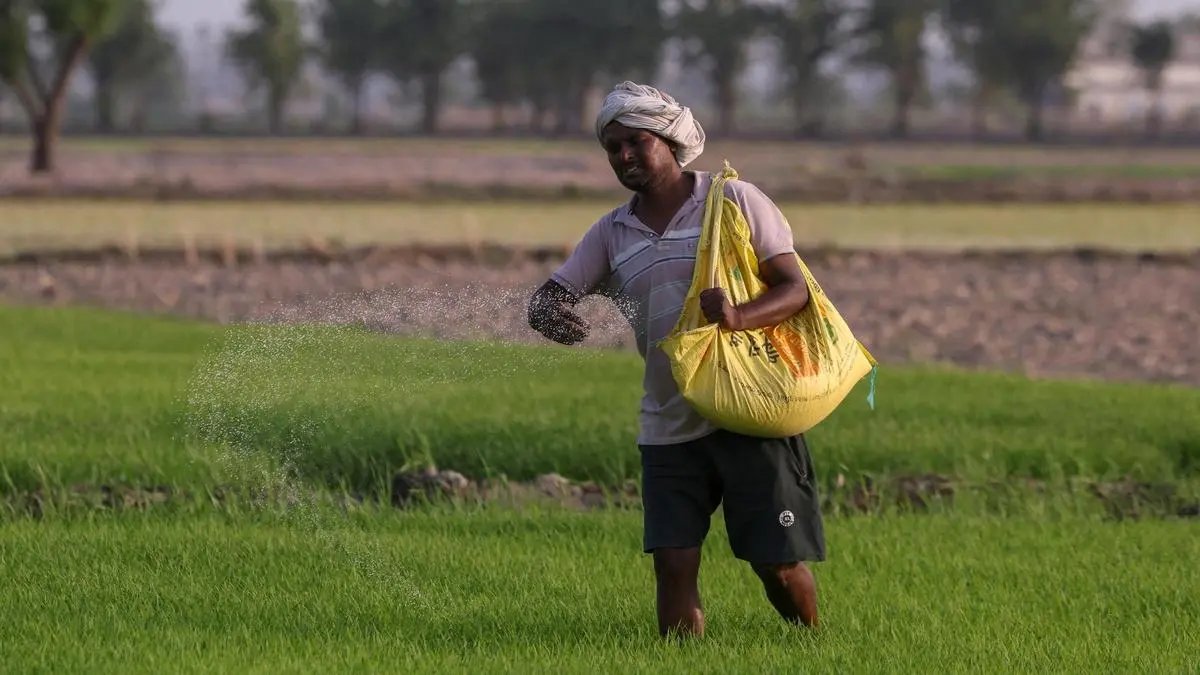
The Union Cabinet on Wednesday approved a ₹62,370-crore subsidy package for phosphatic and potassic (P&K) fertilisers for the Rabi 2026-27 season, a sharp increase aimed at shielding farmers from surging global prices as winter sowing gathers pace.
The decision, taken at a meeting chaired by Prime Minister Narendra Modi, fixes Nutrient Based Subsidy (NBS) rates for the period from October 1, 2026, to March 31, 2027. The tentative budget requirement of ₹62,370.02 crore is ₹24,417.73 crore — nearly 64 per cent — higher than the ₹37,952.29 crore provided for the Rabi 2025-26 season.
What farmers will pay
The subsidy covers 28 grades of P&K fertilisers, including di-ammonium phosphate (DAP) and NPKS compounds used widely in winter crops such as wheat, mustard and pulses. Under the approved rates, the subsidy will be ₹94.21 per kg for nitrogen, ₹66.11 per kg for phosphorus, ₹2.38 per kg for potash and ₹10.42 per kg for sulphur — with the nitrogen and sulphur rates roughly doubling from the Kharif 2026 season.
The government said it would continue special provisions beyond the NBS framework to keep DAP available at ₹1,350 per 50-kg bag, so retail prices for farmers do not rise despite the jump in international prices. The subsidy itself is paid to fertiliser manufacturers and importers, who then sell to farmers at the subsidised price.
Why the bill has jumped
The government cited recent trends in international prices of fertilisers and key inputs — urea, DAP, muriate of potash and sulphur — for resetting the rates. The NBS scheme, under which the subsidy is fixed per nutrient rather than per product, has been in operation since April 1, 2010.
Briefing reporters after the meeting, Information and Broadcasting Minister Ashwini Vaishnaw said the country's total fertiliser stocks stood at 235.21 lakh tonnes as of November 10, against 173 lakh tonnes in the corresponding period last year — a buffer the government says will ensure availability through the season.
A subsidy bill under strain
The Rabi package takes the total P&K subsidy for 2026-27 past the ₹1-lakh-crore mark, after ₹41,533.81 crore was allocated for the Kharif season. The government had in fact cut the overall fertiliser subsidy by more than 8 per cent in the 2026-27 Budget, from ₹1.86 lakh crore in 2025-26 — but spending in the first six months of the year had already crossed 70 per cent of the Budget estimate, according to the Controller General of Accounts.
The Cabinet also extended the Stand-Up India scheme for five more years, until March 2031, with a credit guarantee corpus of ₹4,111 crore. For farmers, the immediate question is simpler: with sowing under way across the wheat belt, the decision is meant to ensure that the season's most important input arrives on time and at a price they can afford.

Comments (0)
No comments yet — be the first to share your view.