Ukraine said on Monday it had sunk a Russian warship docked in Libya using seven domestically-made naval drones, in one of the most audacious long-range attacks of the war — striking a Russian vessel more than 2,000 kilometres from the front lines.
President Volodymyr Zelenskyy confirmed the operation in a post on social media, saying Ukrainian special forces had deployed seven sea drones against the Russian corvette Merkury at the Benghazi naval base in eastern Libya on Sunday. The ship — a Steregushchiy-class corvette and one of the newest vessels in Russia's fleet, commissioned in 2023 — was hit and sank, with a Ka-27 combat helicopter on board also destroyed, he said.
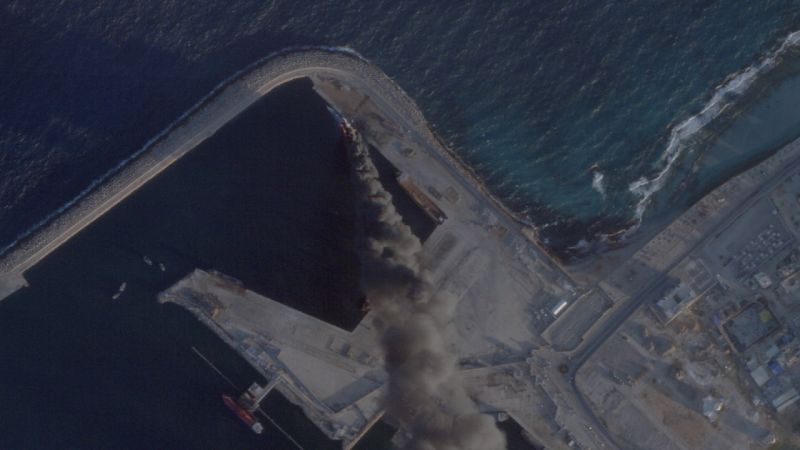
Satellite images show the wreck
Dramatic footage released by Mr. Zelenskyy showed sea drones speeding toward the docked warship before it erupted into a fireball. Satellite images taken after the attack showed the 1,800-tonne vessel capsized and largely submerged, with only its bow still above the water.
Libya's eastern-based government said the ship had stopped at Benghazi to refuel and resupply while returning to Russia under a maritime cooperation agreement. Its preliminary investigation pointed to an attack by unmanned vessels, with Libyan military officials saying the drones had been launched from a base run by Ukrainian forces in western Libya. At least four drones were intercepted and destroyed, officials said, while two struck the warship.
At least 10 people, including Russian and Libyan nationals, were slightly injured in the attack and were being treated in Benghazi, medical sources told Reuters. The eastern Libyan government has called for an international investigation.
A second target
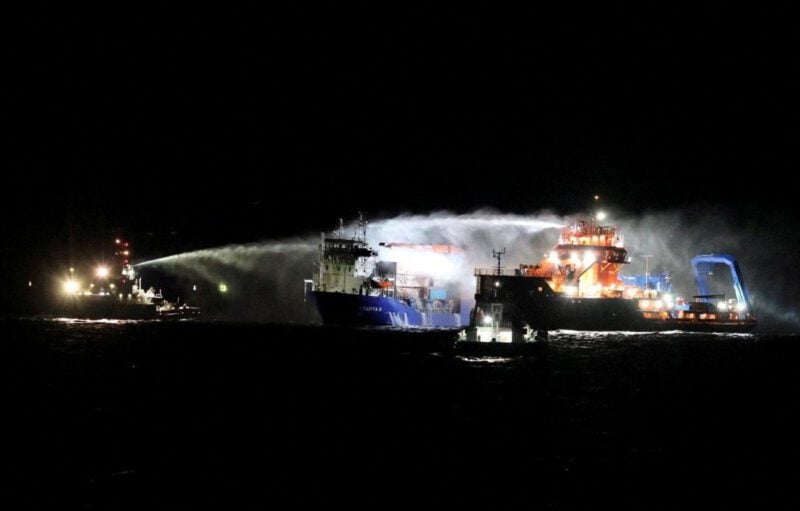
Mr. Zelenskyy said a second target was also hit: the Russian dry cargo vessel MV Angara, which he said Moscow used to transport weapons. Hours after the warship was struck, a Maltese-flagged commercial ship was also hit by a sea drone off the Benghazi coast, Libyan military sources told Reuters.
The attack came a day after a Russian cargo ship was struck by suspected Ukrainian drones in the Baltic Sea, and it is the latest sign that Ukraine's campaign against Russian naval assets has moved far beyond the Black Sea. Russia's Black Sea Fleet has lost more than 20 vessels since the full-scale invasion began, according to the Wall Street Journal.
Why it matters
The Benghazi operation demonstrates the reach of Ukraine's sea-drone programme and its willingness to hit Russian assets wherever they operate — including in a third country, on the Mediterranean coast of North Africa. It also raises difficult questions for Libya's eastern authorities, whose government maintains close ties with Moscow, and for the wider region, as the war's fallout increasingly spills into waters far from Ukraine.
For now, the wreck of the Merkury sits in Benghazi harbour — a visible reminder that the war at sea is no longer confined to the Black Sea.


Comments (0)
No comments yet — be the first to share your view.