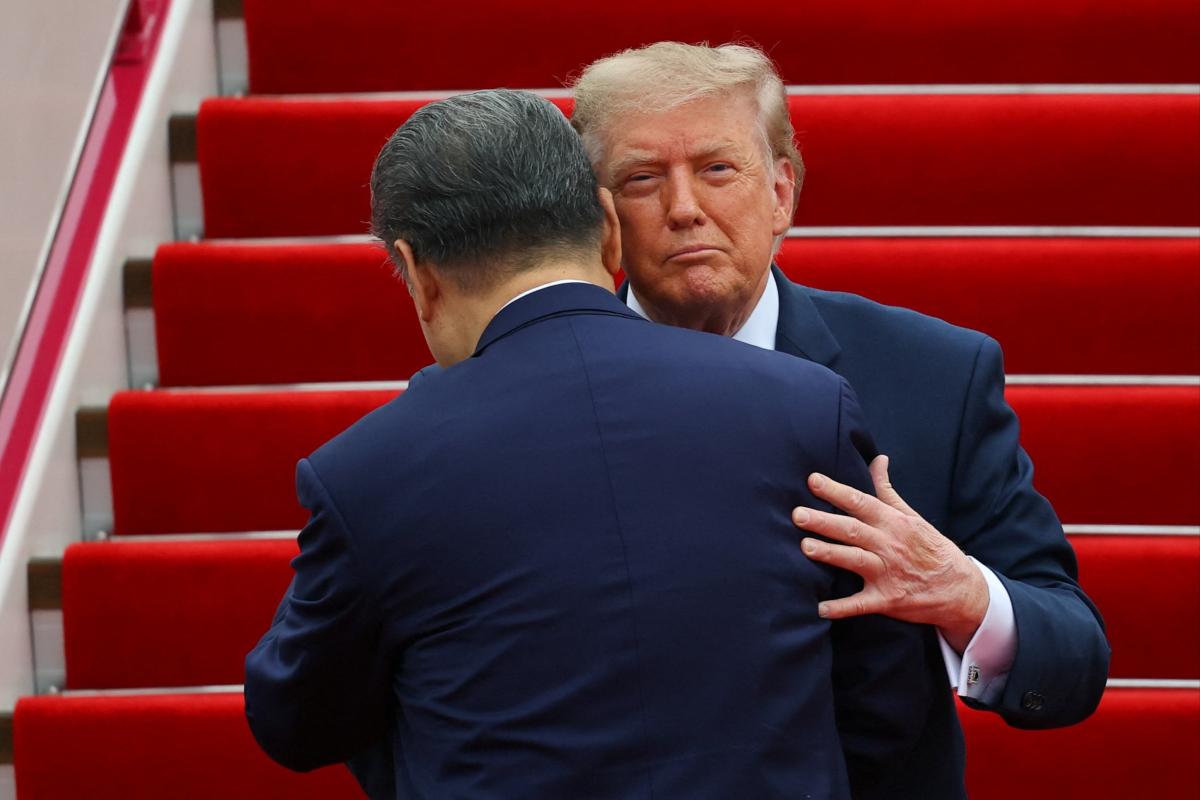
US President Donald Trump arrived in Shenzhen on Wednesday for the first-ever trilateral meeting with Chinese President Xi Jinping and Russian President Vladimir Putin, a gathering of the leaders of the world's three largest nuclear powers that will take place on Thursday on the sidelines of the Asia-Pacific Economic Cooperation summit.
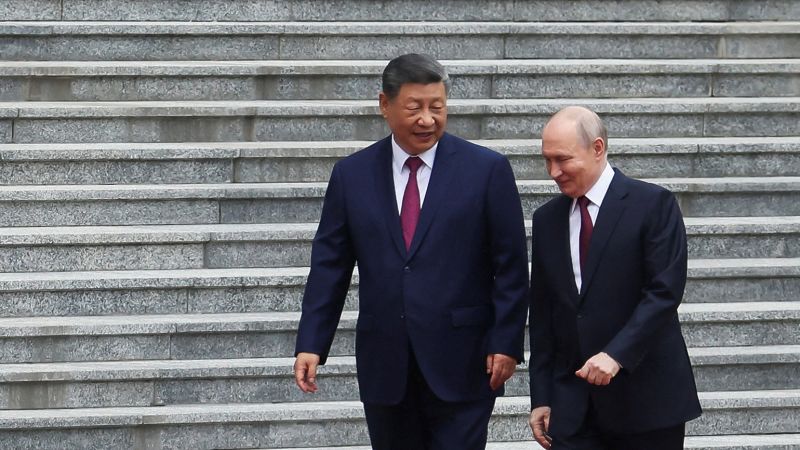
Mr. Xi personally greeted Mr. Trump at Shenzhen Bao'an International Airport, shaking hands and embracing him at the foot of the aircraft stairs — an unusual gesture from a Chinese leader who rarely welcomes visiting heads of state on the tarmac. Earlier on Wednesday, Mr. Putin had been met at the same airport by Cai Qi, one of China's most senior Communist Party officials. Mr. Xi had called Mr. Putin an "old friend" after talks between the two lasting more than two hours, describing the relationship with Russia as "unshaken by storms and as stable as a mountain".
Thursday's schedule
According to the White House press pool schedule, Mr. Trump will attend the APEC plenary session on Thursday morning, hold a bilateral meeting with Mr. Xi at 12:45 p.m., and then join Mr. Xi and Mr. Putin for the three-way talks at 2:30 p.m. at Kylin Villa. The meeting is the last leg of Mr. Trump's Asia tour, which began in Manila, where he attended the ASEAN and East Asia summits and met the leaders of the Quad — India, Japan and Australia.
The White House has said the talks will focus on nuclear arms reductions, with Mr. Trump saying they would cover "many things, including denuclearization". He is seeking a three-way nuclear agreement after the US-Russia arms pact lapsed in February. Trade, technology and the wars in Ukraine and Iran are also expected to feature, though the White House has said Ukraine will not be discussed — a point a Kremlin spokesperson appeared to dispute.
High symbolism, uncertain substance
China's Foreign Ministry said only that the talks would cover "important issues bearing on global peace", giving no detailed agenda. Mr. Xi opened the APEC summit by calling for greater cooperation in international trade, scientific innovation and artificial intelligence, positioning China as a supporter of multilateral engagement.
Expectations of a concrete breakthrough on Thursday remain limited, and the gathering has already drawn anxious commentary in Europe and Ukraine, where officials warn against any arrangement resembling a new Yalta — a deal between great powers struck over the heads of the countries most affected. For now, the diplomatic signals are clearer than the prospect of agreements: Beijing speaks of stability, Moscow of the benefits of dialogue, and Washington of the possibility of nuclear talks.

Comments (0)
No comments yet — be the first to share your view.