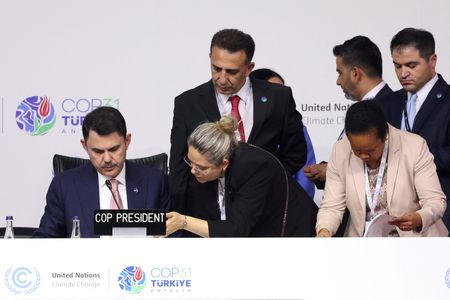
Climate talks in Antalya, Turkey, approached a final deal on Sunday after negotiators unveiled a new package that the summit's presidents hope every country can accept, ending days of deadlock that pushed the conference well past its scheduled close.
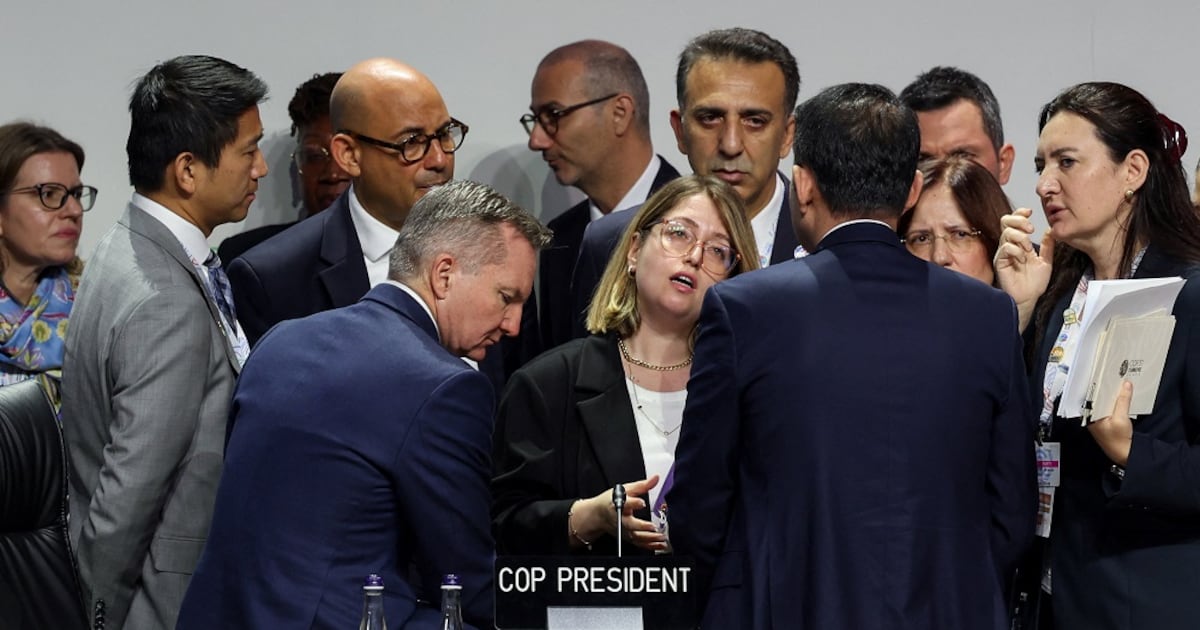
COP31 President Murat Kurum told a late-night plenary session that the new text, drawn up after intensive consultations between Australia, Turkey and nearly 200 national delegations, could command consensus. "We believe that we have put forward a text which all the parties can agree upon," he said. Delegations have until 0300 GMT on Sunday to raise objections, with a session scheduled at 0600 GMT to begin approving the deal.
The summit had been scheduled to end on Friday. Instead, negotiators worked through Saturday and into the early hours of Sunday.
The fossil fuel fault line
The central dispute was over words that were missing. A draft agreement published on Thursday contained no reference to ending the use of fossil fuels, after Saudi Arabia and other major oil and gas producers opposed the language. It also dropped a proposed $120 billion target for finance to help developing countries adapt to climate change, and placed a heavy bet on carbon capture and storage technology, which several delegations criticised as expensive and unproven at scale.
On Friday, a group of countries led by France and Panama pushed back against the draft, joined by small island nations and a strong contingent of European states, which insisted that any final agreement must include a specific reference to reducing fossil fuel emissions. Australia's climate minister Chris Bowen, who has led the talks, also championed a goal of making 35 per cent of the world's energy use electric by 2035 — an ambition some nations in the same bloc resisted.
European Union Climate Commissioner Wopke Hoekstra had warned on Saturday that the summit would "either produce a good deal or no deal at all", while Mr. Kurum acknowledged a deal could prove elusive. Under UN rules, if the standoff cannot be resolved, the talks can be suspended until next year.
Why this COP is different
This year's conference is the first since the UN's environmental body confirmed that the rise in global temperature is set to blow past 1.5 degrees Celsius — the threshold all countries agreed more than a decade ago to try not to exceed, and beyond which extreme weather impacts intensify. The draft agreement, known as the Antalya Accords, would be the first at a COP to acknowledge that the 1.5C goal has been missed.
The United States, the world's largest historical greenhouse gas emitter, is absent from the talks for the second year running after President Donald Trump ended cooperation on climate policy. If the new package survives Sunday's approval session, COP31 will close with a deal its presidents say every country can accept. If objections pile up, the talks could stretch further into Sunday — or collapse into the first COP in a quarter-century to end with no agreement at all, the last being COP6 in The Hague in 2000.

Comments (0)
No comments yet — be the first to share your view.