
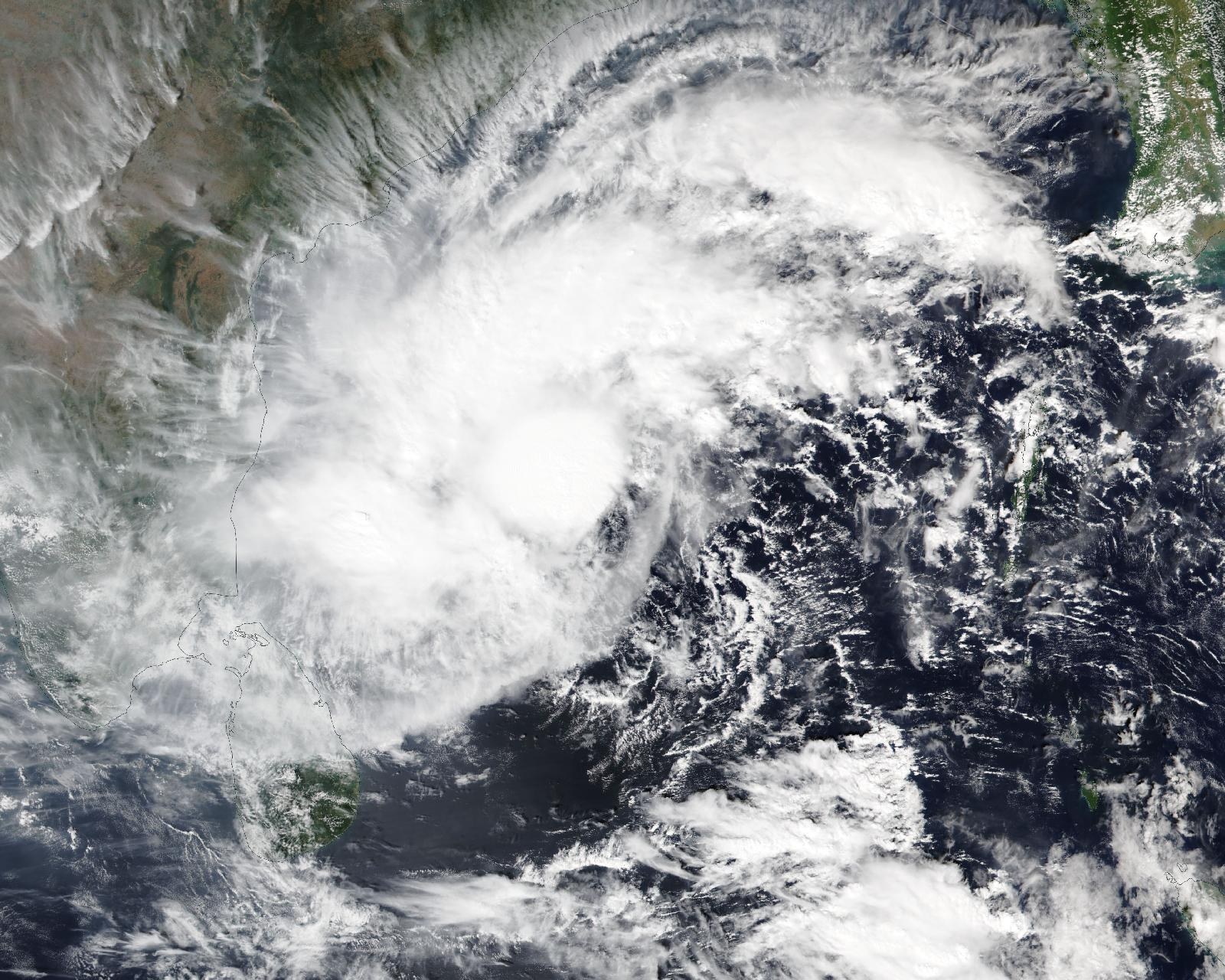
Odisha has moved more than one lakh people to safety as Severe Cyclonic Storm Akvan bears down on the east coast, with landfall expected near Gopalpur around noon on Friday.
By Thursday afternoon, 1,05,304 people had been shifted to 1,224 cyclone and flood shelters, the Odisha government said in an update issued at 1.06 pm. Ganjam district, under which Gopalpur falls, accounted for 45,364 of those evacuated, and more than 18,000 had been moved in Gajapati. Close to 10,000 pregnant women were among those shifted to safety.
Chief Minister Mohan Charan Majhi has said the target is zero casualties, and the administration aims to move two lakh people out of harm's way before the storm comes ashore — Thursday's total is a midpoint, not a final figure, with the operation continuing through the night.
Landfall near Gopalpur on Friday noon
The India Meteorological Department (IMD) said Akvan would cross the north Andhra Pradesh–Yanam and south Odisha coasts between Narsapur and Puri, close to the east of Gopalpur, around noon on Friday, November 20, with maximum sustained winds of 90–100 kmph gusting to 110 kmph.
At 5.30 am on Thursday, the storm lay about 440 km east-southeast of Narsapur, 530 km south of Gopalpur and 590 km south of Puri, after moving north at 12 kmph over the previous six hours. The IMD classifies Akvan as a severe cyclonic storm — a step below "very severe" on its scale.
Heavy to extremely heavy rain is expected in several districts as the system approaches, and a storm surge of 0.5 to 1 metre above the tide has been warned for the Ganjam and Puri coasts and north coastal Andhra Pradesh. The IMD expects rainfall activity to ease from November 21. No deaths have been reported so far.
Red alerts, closed schools, cancelled trains
A red alert is in force for Ganjam, Gajapati, Puri, Jagatsinghpur, Kendrapara and Kandhamal, and for three districts of north Andhra Pradesh — Srikakulam, Vizianagaram and Parvathipuram.
Odisha has shut schools and Anganwadi centres in six districts from November 19 to 21, closed coastal tourist sites including Chilika Lake, Puri beaches, Bhitarakanika and the Nandankanan Zoological Park, and deployed 74 rescue teams — 60 from the Odisha Disaster Rapid Action Force and 14 from the National Disaster Response Force. Railways have rescheduled or regulated 23 trains and cancelled two.
Why Odisha moves so early
Odisha's early, large-scale evacuations are the product of hard lessons — the 1999 super cyclone killed around 10,000 people, and the state has since built one of the world's most practised cyclone-response systems, with coastal shelters and a record of moving hundreds of thousands ahead of major storms.
Officials say the test now is the final hours before landfall: getting the remaining people out of low-lying villages, keeping shelters stocked, and restoring power and roads quickly once the storm passes. The next update will come after the crossing, when the first damage and rainfall reports arrive from Ganjam, Puri and Gajapati.


Comments (0)
No comments yet — be the first to share your view.