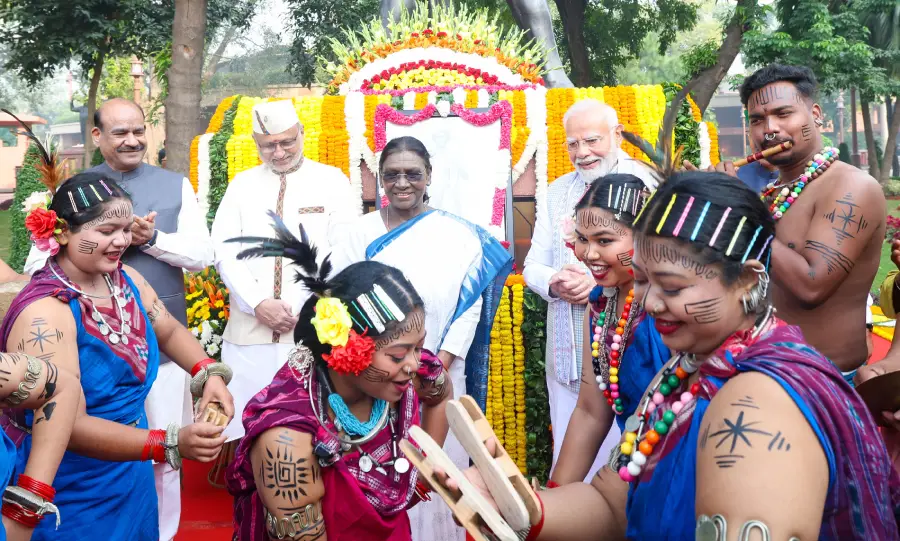
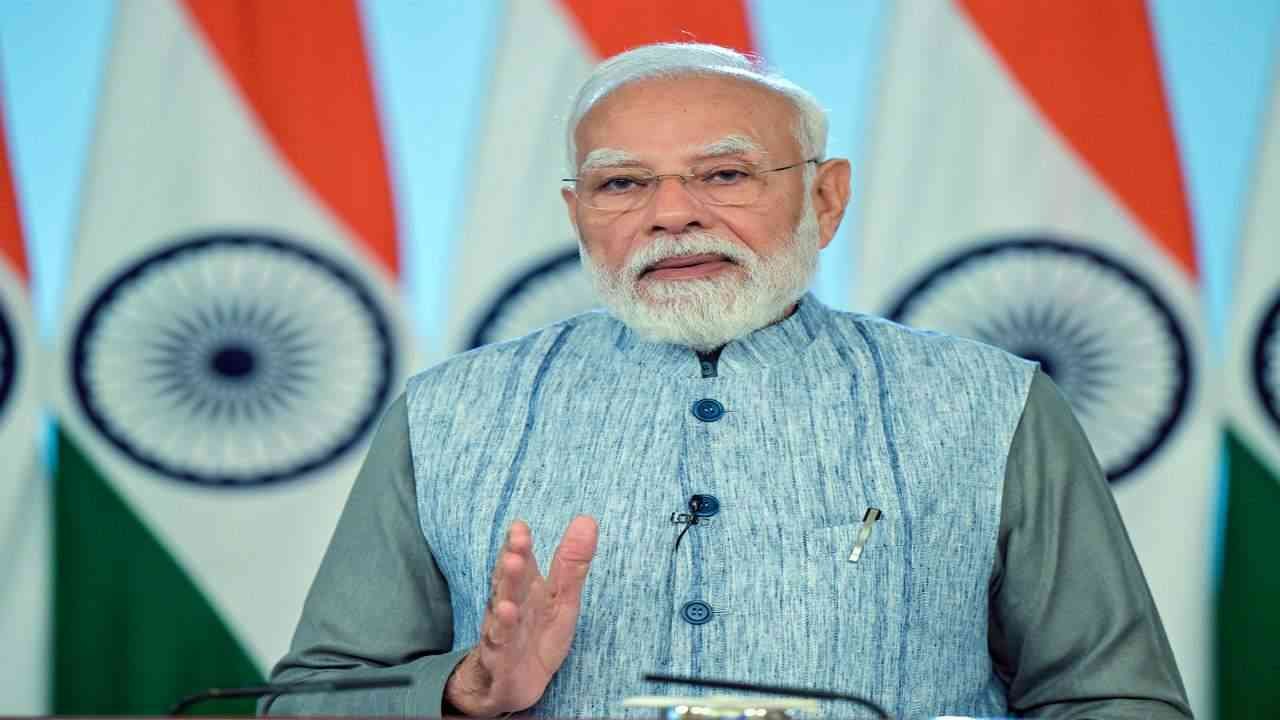
Prime Minister Narendra Modi on Sunday unveiled 246 tribal development projects worth approximately ₹3,000 crore, virtually addressing the national Janjatiya Gaurav Diwas programme in Gadchiroli, Maharashtra, on the 151st birth anniversary of tribal freedom fighter Birsa Munda.
Of the 246 projects, 173 were inaugurated and foundation stones were laid for 73 others, covering education, healthcare, livelihoods and community infrastructure for tribal communities across the country. Among those inaugurated were 38 Eklavya Model Residential Schools for tribal students and 100 multi-purpose centres under the Pradhan Mantri Janjati Adivasi Nyaya Maha Abhiyan (PM-JANMAN). The Prime Minister also inaugurated the Tribal Research Institute building in Itanagar, Arunachal Pradesh, and the Ropuiliani Tribal Freedom Fighter Museum in Aizawl, Mizoram.
Foundation stones were laid for 19 more Eklavya schools, 12 Tribal Multi-purpose Marketing Centres to improve market access for tribal producers, and 42 further projects under PM-JANMAN and the Dharti Aaba Janjatiya Gram Utkarsh Abhiyan (DAJGUA). The programme marked the culmination of Janjatiya Gaurav Pakhwada, observed nationwide from November 1 to 15.
Addressing tribal community members from across the country, Mr. Modi linked the transformation of tribal regions to the country's progress in poverty reduction and the elimination of Naxalism, saying nearly 50 crore people had moved out of extreme poverty over the past 12 to 13 years and the country had become free from Naxalism and Maoist terror. He also criticised previous governments, saying they had “neither understood the tribal communities nor cared about them”.
Who was Birsa Munda
Birsa Munda, born in 1875 in present-day Jharkhand, led the Ulgulan — the Great Tumult — a tribal uprising against British rule and exploitative landlords in the Chotanagpur region in the late 1890s. He died in Ranchi jail in 1900, aged 25. Janjatiya Gaurav Diwas has been observed every year on November 15, his birth anniversary, since 2021, to recognise the contribution of tribal communities to India's freedom struggle and national development.
What the projects aim to do
The Eklavya Model Residential Schools provide structured residential secondary education for tribal children in remote, forested districts, while the PM-JANMAN multi-purpose centres are intended as hubs for service delivery and community activities, with a focus on Particularly Vulnerable Tribal Groups. The marketing centres are meant to help tribal producers reach buyers directly instead of depending on middlemen.
Why Gadchiroli matters
Gadchiroli, in eastern Maharashtra, was long counted among the country's worst Naxal-affected districts, which is why the government chose it as the venue for a programme that frames development — schools, roads, healthcare and livelihoods — as the answer to insurgency. The test of Sunday's announcements will lie in delivery: whether the new schools are staffed, the centres function, and the projects reach the villages they were promised to.

Comments (0)
No comments yet — be the first to share your view.