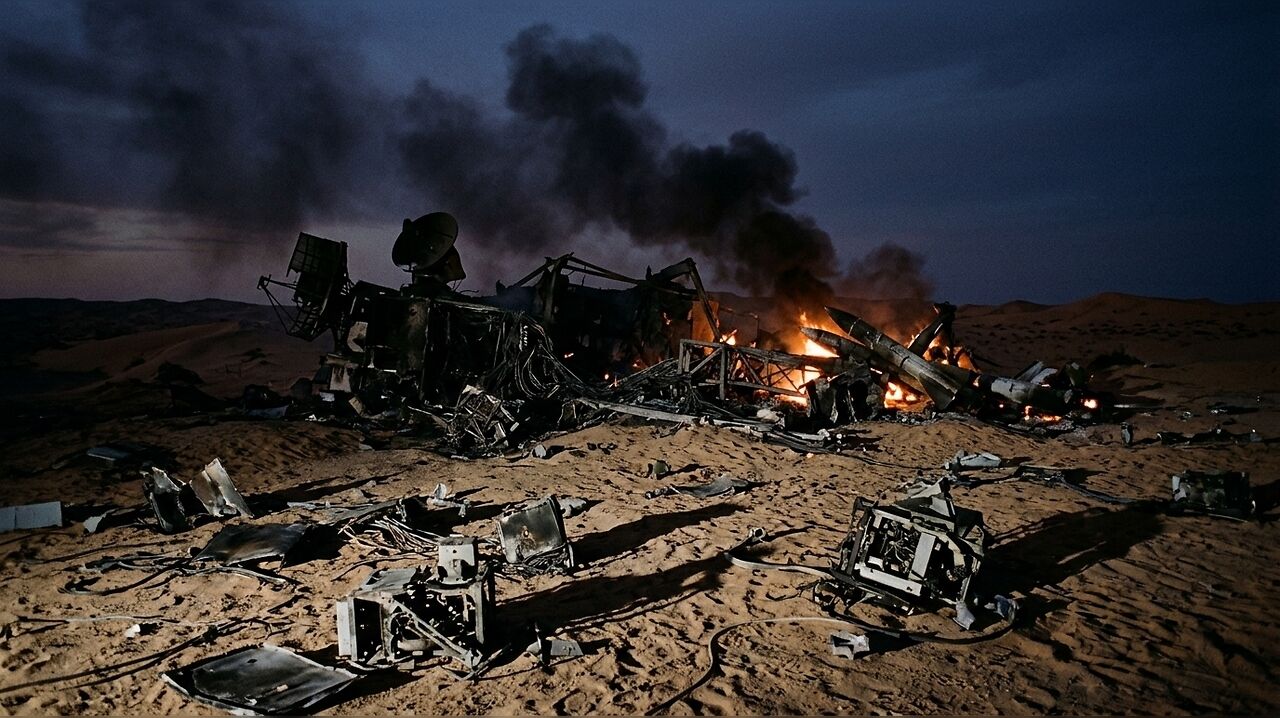
Two Italian technicians were killed on Thursday in a drone attack on a military site in Kuwait, in an incident that Italy and Kuwait have blamed on Iran and Tehran has firmly denied.
Italian Foreign Minister Antonio Tajani told the Senate in Rome that several drones of Iranian origin targeted Kuwaiti military installations, including an air-defence detection station where the two men were working. Italian media identified them as Antonio Saccoccio, 65, from Formia, and Emanuele Lo Russo, 36, from Rome — technicians for Rheinmetall Italia, the Italian arm of German defence group Rheinmetall, maintaining detection antennas for the Skyguard air-defence system used by Kuwait's armed forces.
"Following a powerful explosion, both of our compatriots, according to information coming from Kuwait, have died," Mr. Tajani said. Kuwait's Defence Ministry confirmed the deaths after initially reporting four people wounded by falling debris at a "vital facility" it called an Iranian attack. Two others were injured — a Pakistani national and a Kuwaiti army captain.
Tehran denies any role
Iran has denied carrying out the attack. Brigadier General Abolfazl Shekarchi, a senior spokesperson for Iran's armed forces, said no military or offensive operations had been conducted by Iranian forces in the region. Foreign Minister Abbas Araghchi called his Italian and Kuwaiti counterparts to deny Iranian involvement and offered to cooperate in a joint investigation, describing the incident as suspicious and like a "pre-cooked recipe for war".
Tehran has suggested the strike may have been a "false flag" operation designed to widen the conflict and draw European countries into the Middle East crisis — a claim Rome has rejected. Mr. Tajani told reporters later on Thursday that the drone used in the attack was manufactured in Iran, of a type also used by Iran-backed militias.
A widening Gulf conflict
Thursday's attack was the second reported Iranian strike on Kuwait this month, according to Reuters. The two dead men are the first European civilians killed as a result of the US-Israel war on Iran since the campaign began in late February, a marker of how the conflict has spread to Gulf states hosting American allies and their contractors.
The same day, a separate attack on a Saudi Aramco refinery in Jazan, in south-western Saudi Arabia, killed a Nepali worker and injured several others, in an incident the Saudi-led coalition attributed to Yemen's Houthi rebels. The two attacks, hours apart, underlined how the region's overlapping conflicts are increasingly colliding in the Gulf.
What happens next
The dispute over who launched the drones is unlikely to be settled quickly. Only debris, radar tracks and a launch point can establish the origin of the strike. Italy has demanded answers, Kuwait has condemned what it called Iranian aggression, and Iran has insisted on its innocence while offering to join an investigation.
The technicians were not soldiers, but civilian contractors maintaining the equipment that guards Kuwait's skies — and their deaths show how the conflict's front line now runs through the workplaces of foreign civilians across the Gulf.

Comments (0)
No comments yet — be the first to share your view.