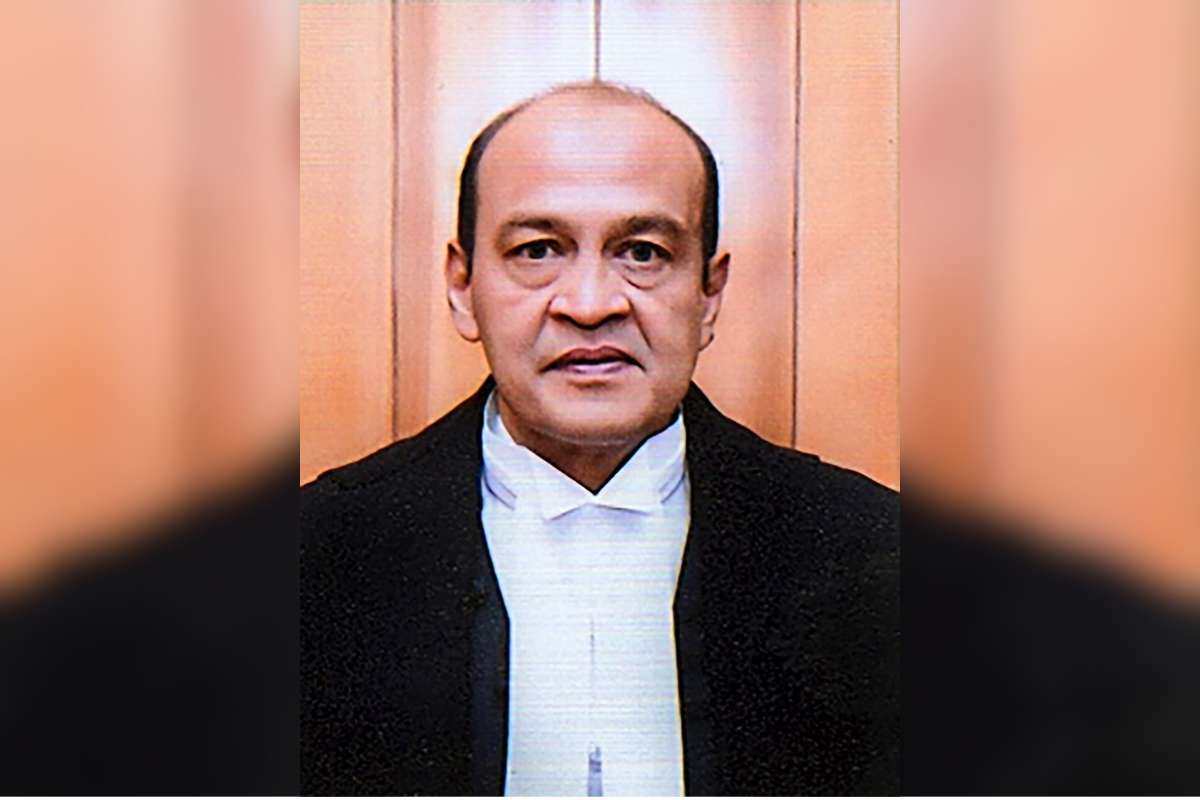
Former Allahabad High Court judge Yashwant Varma has told the Lok Sabha Secretariat that the proceedings to remove him from office became infructuous the moment he resigned, and that his resignation should not be read as an admission of guilt.
In a letter dated September 10, circulated among members of Parliament on Thursday, Justice Varma said proceedings directed towards his removal did not survive his resignation, arguing that any further action would lack a constitutional basis. The letter, addressed to Lok Sabha Secretary General Utpal Kumar Singh, responds to the report of a three-member inquiry committee that found all three charges against him proved. Justice Varma reiterated his innocence, maintaining he had no connection with the cash.
How the case unfolded
The controversy began on the night of March 14, 2025, when a fire broke out at Justice Varma's official residence at 30, Tughlaq Crescent in New Delhi. Firefighters tackling the blaze discovered partially burnt wads of currency notes in a storeroom.
Justice Varma, then a judge of the Delhi High Court, denied any knowledge of the money, describing the storeroom as a general dumping area. He was transferred to the Allahabad High Court, and an in-house inquiry ordered by then Chief Justice of India Sanjiv Khanna found him prima facie guilty.
After 146 MPs signed a motion seeking his removal, Lok Sabha Speaker Om Birla constituted a three-member statutory committee under the Judges (Inquiry) Act, 1968, headed by Supreme Court Justice Aravind Kumar. Justice Varma challenged the Speaker's decision in the Supreme Court, which rejected his plea in January 2026.
On April 9, 2026, Justice Varma resigned by writing to President Droupadi Murmu, with immediate effect, and withdrew from the proceedings. The committee continued ex parte and submitted its report to the Speaker in May; it was tabled in Parliament in August. It concluded that Justice Varma had failed to explain the presence, source or ownership of the cash, had failed to preserve material evidence, and had offered evasive and unsatisfactory explanations.
The constitutional question
The dispute now turns on whether Parliament can continue removal proceedings against a judge who has already resigned. A 1978 Constitution Bench ruling held that a High Court judge's resignation takes effect immediately on receipt by the President and needs no formal acceptance. On that reading, there is no office left from which to remove him — and no judge has ever been removed by Parliament in India.
Others argue the position is less clear-cut. The Allahabad High Court's website continued to list Justice Varma among its judges months after his resignation, and some lawyers, including Supreme Court Bar Association president Vikas Singh, contend the process should reach its logical end.
The Lok Sabha Secretariat has not publicly stated its position, and the Speaker's office has not indicated whether the matter will be placed before the House — leaving Parliament with an unresolved question at the heart of judicial accountability: whether resignation can close a removal process the Constitution designed to be almost impossible to complete.


Comments (0)
No comments yet — be the first to share your view.